Walleye
Sander vitreus
America's finest eating fish and one of the most sought-after freshwater species in the northern states.

Walleye hold a near-mythical status among freshwater anglers in the northern United States and Canada. Renowned for their exceptional table quality and challenging angling, walleye inspire a level of devotion that borders on obsession in states like Minnesota, Wisconsin, and Michigan. From ice-out jigging in March to midsummer trolling to hardwater tip-up fishing in January, walleye provide year-round opportunities that keep millions of anglers returning to the water.
Biology & Appearance
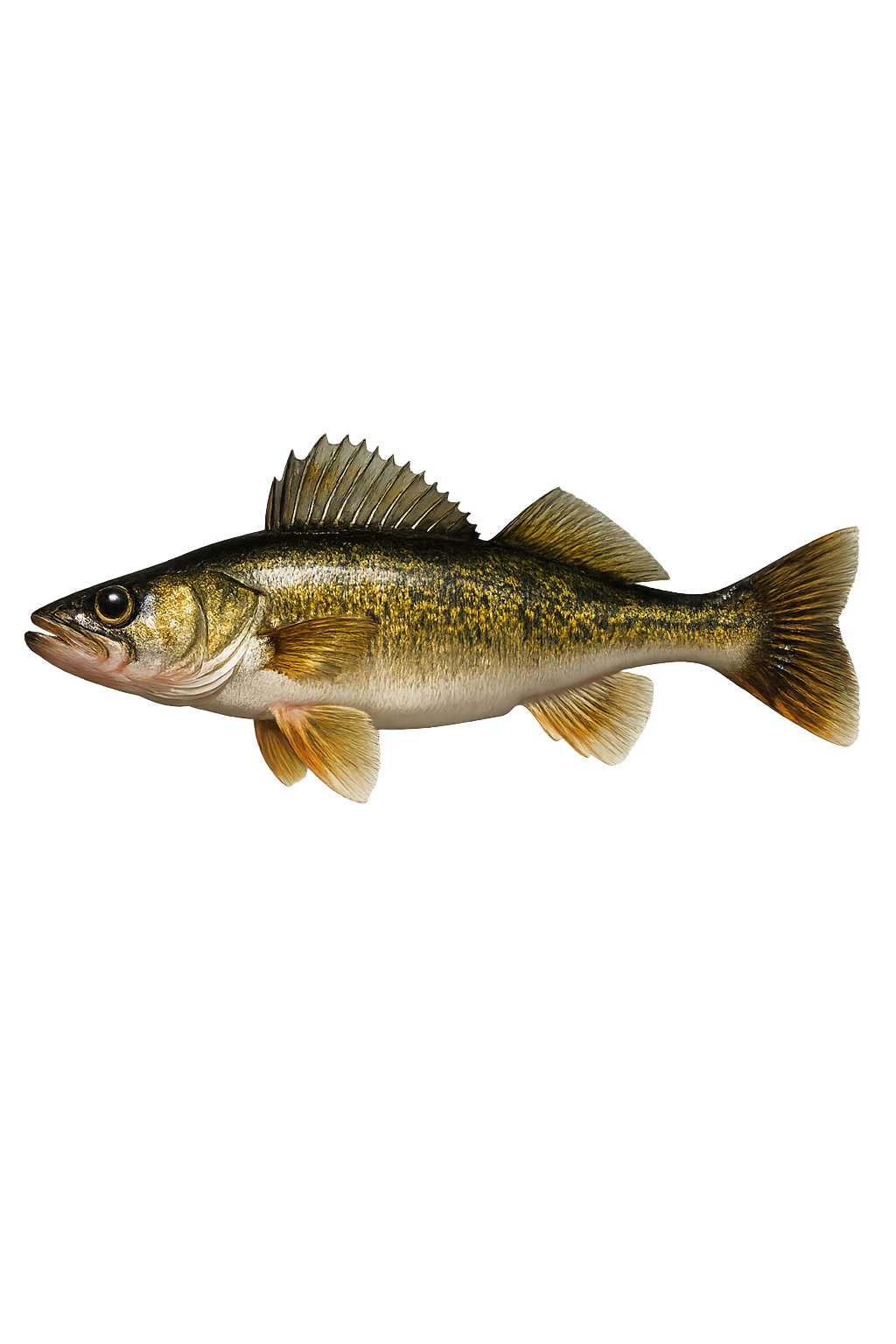
Walleye are named for their distinctive large, glassy eyes, which contain a reflective layer called the tapetum lucidum. This adaptation gives walleye superior low-light vision and is the key to understanding their behavior — they are most active during low-light conditions when they have a visual advantage over prey. Their olive-gold coloration with a white-tipped lower tail fin makes them easily identifiable.
Habitat & Distribution
Walleye inhabit large, moderately clear lakes, reservoirs, and rivers with hard-bottom structure. They relate to transitions — where sand meets rock, where weeds meet open water, where shallow flats drop into deep basins. Key structural elements include points, bars, humps, reefs, and river channel edges. Water temperature and light penetration are the two most important factors driving walleye location. They prefer 55-70°F water and will seek deeper, darker water when conditions are too bright.
Best Seasons for Fishing
Spring
The best walleye fishing of the year occurs right after ice-out and the spring spawn (March-April). Walleye stack up on rocky spawning reefs and river riffles. Jig and minnow is the classic approach, with slow presentations in shallow water (3-10 feet).
Summer
Walleye move to deeper structure — main lake points, humps, and weed edges. Live bait rigs (Lindy rig with leeches or crawlers) and crankbaits trolled along structure lines are the go-to methods. Night fishing with shallow-running crankbaits produces big fish.
Fall
Walleye feed aggressively before winter. They're often found on windblown shorelines, rocky points, and transition areas between weeds and deeper water. Jigs with minnows and crankbaits in natural colors are most effective.
Winter
Ice fishing for walleye is a treasured tradition. Tip-ups with shiners and jigging spoons or Rapala-style jigs tipped with minnow heads produce fish on known structure — bars, points, and drop-offs in 15-30 feet.
Effective Fishing Techniques
Jig and Minnow
The fundamental walleye technique. A 1/8 to 3/8 oz jig head tipped with a live fathead minnow, presented vertically over structure. Snap-jigging (lift, pause, let fall) triggers strikes from inactive fish. Match jig weight to depth and current.
Lindy Rig
The classic live bait rig for walleye. A sliding sinker ahead of a swivel, 3-5 feet of fluorocarbon leader, and a single hook baited with a leech, crawler, or minnow. Drift or troll slowly along structure contours. When you feel a bite, feed line before setting the hook.
Trolling Crankbaits
Cover water efficiently by trolling crankbaits at 1.5-2.5 mph along structure edges, weed lines, and contours. Use planer boards to spread lines. Shad Raps, Flicker Shads, and deep-diving stick baits in perch, shad, and firetiger patterns are staples.
Ice Fishing
Target known walleye structure through the ice. Drill holes over bars, points, and transitions. Tip-ups with large shiners cover the area, while jigging with spoons or swimming lures tipped with minnow heads provides active fishing. Dawn and dusk are peak bite windows.
Tackle & Gear Recommendations
| Gear Type | Recommendation |
|---|---|
| Rod | 6'6" to 7' medium-light spinning rod for jigging; 7'-8' medium trolling rod |
| Reel | 2500-3000 size spinning reel; line counter trolling reel |
| Line | 6-8 lb fluorocarbon or 10 lb braid with 8 lb fluoro leader |
| Lures | Lead head jigs, live bait rigs, crankbaits (Shad Rap, Flicker Shad), jigging spoons |
Pro Tips for Success
Walleye have light-sensitive eyes — they feed most actively during low-light periods (dawn, dusk, night, overcast).
Follow the wind — walleye often feed on windblown shorelines where wave action stirs up baitfish.
Use a light touch — walleye have subtle bites. Keep a semi-slack line to feel gentle taps.
Electronics are invaluable — use sonar to mark structure and baitfish before fishing.
Fresh live bait outperforms old bait dramatically. Change minnows/leeches frequently.
Frequently Asked Questions
Why are walleye considered the best-eating freshwater fish?
Walleye have firm, white, mild-flavored flesh with virtually no "fishy" taste. Their firm texture holds up well to any cooking method — pan-fried, baked, grilled, or deep-fried. The boneless fillets are easy to prepare, and even people who claim they don't like fish often enjoy walleye. A fresh shore lunch of walleye is a quintessential northern fishing experience.
What is the best time to catch walleye?
Walleye are crepuscular feeders, meaning dawn and dusk are consistently the most productive times. Night fishing is also excellent, particularly in summer. Overcast, windy days can extend the bite all day. The absolute best walleye fishing typically occurs in the 2-3 weeks following ice-out in spring, when fish are concentrated near spawning areas.
Where is the best place to catch Walleye?
The best places to catch Walleye are in Large lakes, reservoirs, and rivers with moderate clarity and structure. Top states include MN, WI, MI. Local knowledge and seasonal patterns are key to finding productive spots.
What is the world record Walleye?
The world record Walleye weighs 25 lbs (Mabry Harper, 1960, Old Hickory Lake, TN). This represents the largest authenticated catch on record. Most anglers pursue fish in the 1-4 lbs (14-22 inches) range.
What month is best for Walleye fishing?
The best months for Walleye fishing vary by location. Spring and summer typically offer excellent opportunities. Check your local regulations and seasonal guides for the most current information on your target waters.
What water temperature do Walleye prefer?
Walleye thrive in waters with specific temperature ranges depending on the season. Monitor water temperature when planning your fishing trip for optimal success and catch rates.
Can you catch Walleye from shore?
Yes, Walleye can often be caught from shore in suitable habitats like Large lakes, reservoirs, and rivers with moderate clarity and structure. Use appropriate gear and techniques for your chosen location. Always check local regulations before fishing.
What bait works best for Walleye?
Live bait, artificial lures, and specialized tackle are effective for Walleye. Check the techniques and gear sections above for detailed recommendations based on your preferred fishing method.
Is Walleye good to eat?
Walleye is valued both as a game fish and for its culinary qualities in many regions. Check your local fishing regulations for specific rules about harvest and consumption.
What size hook for Walleye?
Hook size depends on your target Walleye size and bait choice. Medium to large hooks are typically recommended. See the gear breakdown section for specific tackle recommendations.