Rainbow Trout
Oncorhynchus mykiss
The world's most widely distributed salmonid, prized for its beauty, fight, and exceptional table fare.

Rainbow trout hold a special place in American fishing culture. Whether it's a wild native stream fish in the Rocky Mountains, a chrome-bright steelhead charging upstream in an Oregon river, or a freshly stocked rainbow in a community pond, this species connects anglers of all backgrounds to the outdoors. Their willingness to take both flies and lures, combined with their leaping fight and beautiful appearance, makes rainbow trout the perfect gamefish for beginners and experts alike.
Biology & Appearance
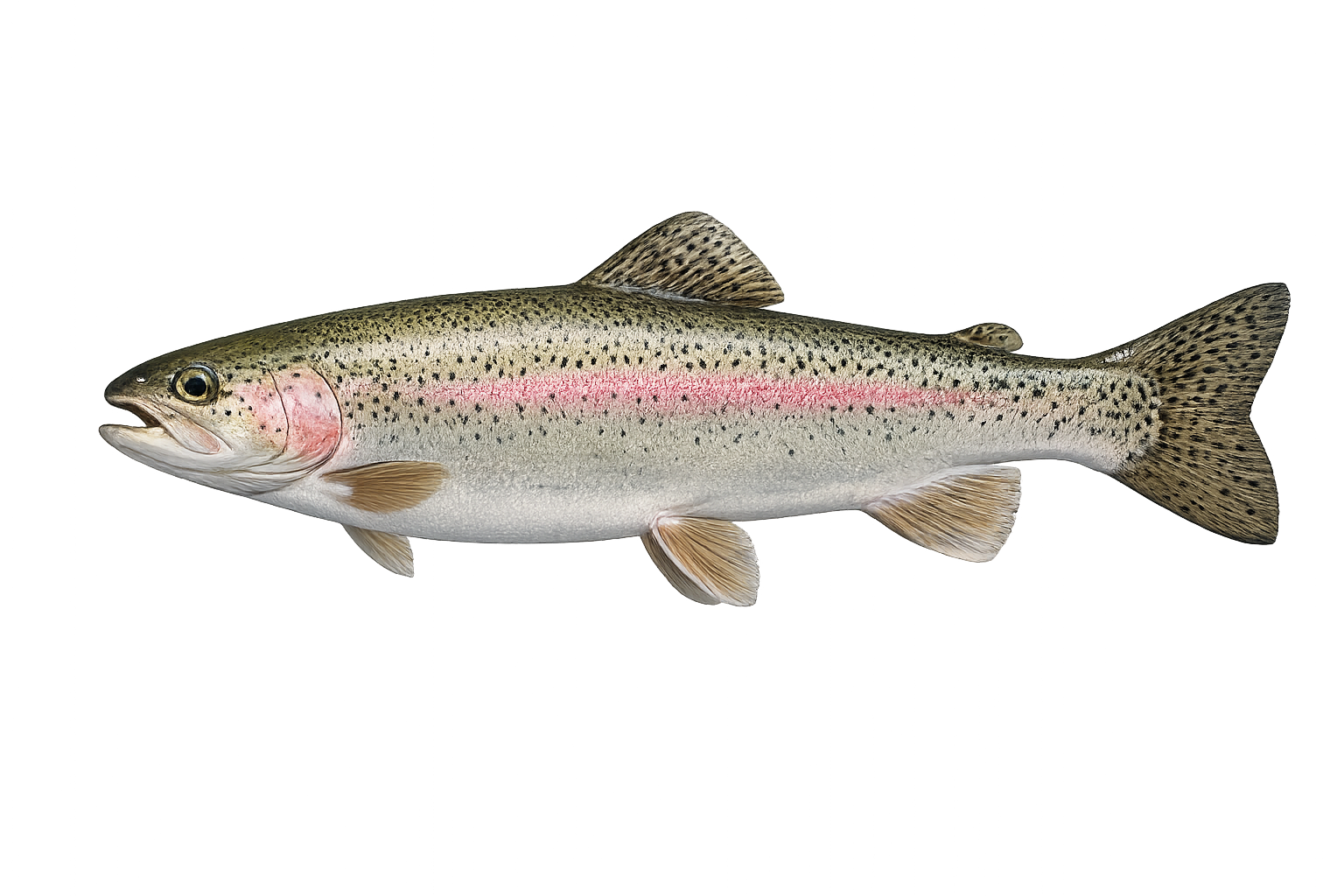
Native to Pacific drainages from Alaska to Mexico, rainbow trout have been introduced worldwide and now inhabit suitable cold-water habitats on every continent except Antarctica. Their distinctive pink-to-red lateral stripe and speckled appearance makes them instantly recognizable. Rainbow trout are opportunistic feeders that consume aquatic insects, crustaceans, small fish, and terrestrial insects. Their diet flexibility is one reason they thrive in such diverse habitats.
Habitat & Distribution
Rainbow trout require cold, well-oxygenated water to survive. In streams, they position behind current breaks — rocks, logs, and ledges — where they can hold in slower water while food drifts past. In lakes, they cruise structure and thermoclines where water temperatures are optimal. The best trout streams have a mix of riffles (for oxygenation and insect production), runs (feeding lanes), and pools (resting water and winter holding areas).
Best Seasons for Fishing
Spring
Prime time for stream trout as snowmelt increases flows and insect hatches begin. March through May brings prolific mayfly, caddis, and midge hatches. Nymphing and streamers are productive in high, stained water; dry flies excel during visible hatches.
Summer
Early morning is critical as trout feed before water temperatures peak. Focus on shaded runs, spring-fed tributaries, and higher elevation streams. Terrestrial patterns (hoppers, ants, beetles) become primary forage. Evening spinner falls can produce magical dry fly fishing.
Fall
Many wild rainbow populations become more active as water cools and spawning approaches. Fall colors and fewer anglers make this an exceptional time. Egg patterns, streamers, and Blue-Winged Olive hatches are productive. Steelhead begin entering Pacific Northwest rivers.
Winter
Trout metabolisms slow but they still feed. Focus on the warmest part of the day and target deep, slow pools. Small midges and Blue-Winged Olives hatch on mild days. Nymphing with small flies (size 18-22) is the most productive approach.
Effective Fishing Techniques
Fly Fishing - Dry Flies
The pinnacle of trout angling — presenting a floating fly that imitates adult insects on the surface. Match the hatch by observing what insects are active. Cast upstream of rising fish and achieve a drag-free drift. Size and silhouette matter more than exact color.
Nymphing
Trout feed subsurface 80-90% of the time. Euro-nymphing (tight-line techniques) and indicator nymphing are devastatingly effective. Fish two-fly rigs with a heavy point fly near the bottom and a smaller dropper higher up. Adjust weight to maintain bottom contact.
Spinner Fishing
Inline spinners like Panther Martins and Rooster Tails are the go-to for rainbow trout in streams and stocked waters. Cast upstream and retrieve just fast enough to keep the blade spinning. Gold and silver blades in sizes 1/8 to 1/4 oz cover most situations.
PowerBait/Dough Bait
For stocked rainbow trout in lakes and ponds, floating dough bait (PowerBait) on a slip-sinker rig is extremely effective. Use a small treble hook, mold the bait around it, and let it float 18-24 inches off the bottom near stocking locations.
Tackle & Gear Recommendations
| Gear Type | Recommendation |
|---|---|
| Rod | 5-weight fly rod (9') for streams; ultralight spinning rod (5'-6') for spin fishing |
| Reel | Fly reel with disc drag; 1000-size spinning reel |
| Line | 4-6 lb monofilament for spinning; 5X-6X tippet for fly fishing |
| Lures | Dry flies, nymphs, streamers, inline spinners, spoons, PowerBait |
Pro Tips for Success
Approach streams quietly — trout are easily spooked. Stay low, wear muted colors, and avoid casting shadows.
In clear water, a thinner tippet (6X-7X) dramatically increases strikes on fly gear.
Look for feeding lanes — current seams where food naturally concentrates.
Dawn and dusk are prime feeding times, but midday midge hatches can be excellent in winter.
Stocked trout hold near their stocking point for 1-2 weeks before dispersing.
Wild trout fight harder and are warier than stocked fish — adjust your approach accordingly.
Frequently Asked Questions
What is the difference between rainbow trout and steelhead?
Steelhead are rainbow trout that migrate to the ocean (or Great Lakes) and return to rivers to spawn. They are genetically identical but steelhead grow much larger (8-20+ lbs vs 1-5 lbs) due to the abundant forage in open water. Steelhead are typically chrome-silver from the ocean, while resident rainbows display more colorful markings.
What water temperature do rainbow trout prefer?
Rainbow trout are most active and healthy in water between 50-65°F. They can survive in water up to about 75°F but become stressed above 68°F. Below 40°F, they become less active but will still feed. Spring-fed streams that maintain consistent cool temperatures produce the best year-round trout fishing.
Where is the best place to catch Rainbow Trout?
The best places to catch Rainbow Trout are in Cold, clear streams, rivers, and lakes with water temps under 70°F. Top states include CO, MT, OR. Local knowledge and seasonal patterns are key to finding productive spots.
What is the world record Rainbow Trout?
The world record Rainbow Trout weighs 48 lbs (Sean Konrad, 2009, Lake Diefenbaker, SK). This represents the largest authenticated catch on record. Most anglers pursue fish in the 1-5 lbs (12-20 inches) range.
What month is best for Rainbow Trout fishing?
The best months for Rainbow Trout fishing vary by location. Spring and summer typically offer excellent opportunities. Check your local regulations and seasonal guides for the most current information on your target waters.
What water temperature do Rainbow Trout prefer?
Rainbow Trout thrive in waters with specific temperature ranges depending on the season. Monitor water temperature when planning your fishing trip for optimal success and catch rates.
Can you catch Rainbow Trout from shore?
Yes, Rainbow Trout can often be caught from shore in suitable habitats like Cold, clear streams, rivers, and lakes with water temps under 70°F. Use appropriate gear and techniques for your chosen location. Always check local regulations before fishing.
What bait works best for Rainbow Trout?
Live bait, artificial lures, and specialized tackle are effective for Rainbow Trout. Check the techniques and gear sections above for detailed recommendations based on your preferred fishing method.
Is Rainbow Trout good to eat?
Rainbow Trout is valued both as a game fish and for its culinary qualities in many regions. Check your local fishing regulations for specific rules about harvest and consumption.
What size hook for Rainbow Trout?
Hook size depends on your target Rainbow Trout size and bait choice. Medium to large hooks are typically recommended. See the gear breakdown section for specific tackle recommendations.