Largemouth Bass
Micropterus salmoides
America's most popular freshwater gamefish, found in lakes and reservoirs across all 50 states.

Largemouth bass are the undisputed king of freshwater fishing in America. With an estimated 30 million bass anglers generating over $16 billion in economic activity annually, bass fishing is more than a hobby — it's a way of life. Found in every state from Florida's trophy lakes to California's clear impoundments, the largemouth bass rewards both beginners and seasoned tournament pros with explosive strikes and acrobatic fights.
Biology & Appearance
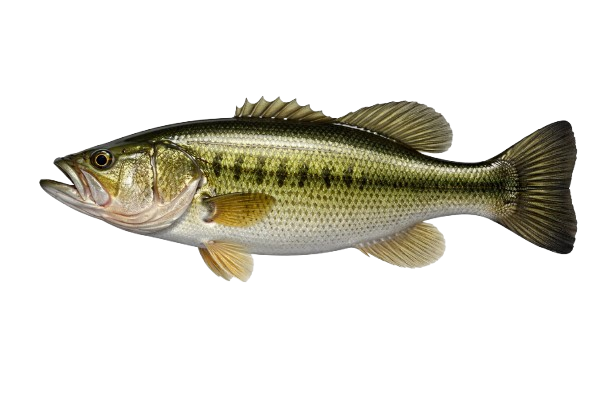
Largemouth bass are distinguished by their trademark oversized mouth — the upper jaw extends past the eye, unlike their smallmouth cousins. They're typically olive-green with a dark lateral stripe, though coloration varies significantly by habitat. Clear-water bass tend to be lighter with more distinct markings, while muddy-water fish are darker overall. They are warm-water predators that thrive in temperatures between 65-85°F, preferring shallow, vegetated areas with abundant cover for ambush feeding.
Habitat & Distribution
The ideal largemouth habitat includes shallow water (2-15 feet) with abundant cover. Vegetation is the single most important habitat feature — hydrilla, milfoil, lily pads, and cattails all create prime bass habitat. In the absence of vegetation, bass relate to wood cover (fallen trees, stumps, docks), rocks (riprap, boulders, bluffs), and man-made structure (bridge pilings, retaining walls). Understanding seasonal movements between shallow and deep water is the key to consistently finding bass throughout the year.
Best Seasons for Fishing
Spring
Pre-spawn and spawn (March-May) is the best time to catch trophy largemouth. Fish move shallow to beds in 55-65°F water. Target sandy or gravel flats near deeper water using soft plastics, jigs, and spinnerbaits. Sight-fishing bedding bass is most productive in clear water.
Summer
Bass move to deeper structure and shade during hot months. Early morning topwater action can be explosive before 9 AM. Fish deep points, humps, and ledges with crankbaits, Carolina rigs, and drop shots during midday. Night fishing with black buzzbaits produces big fish in July and August.
Fall
Fall feeding frenzy occurs as bass follow shad into creeks and shallow coves. September through November offers some of the best numbers fishing of the year. Match the hatch with shad-colored crankbaits, swimbaits, and jerkbaits. Focus on main lake points where baitfish congregate.
Winter
Largemouth become lethargic in cold water below 50°F. Slow presentations are key — use jigs, blade baits, and suspending jerkbaits. Fish the warmest part of the day (noon-3 PM). Target deep rocky banks, channel swings, and any remaining vegetation.
Effective Fishing Techniques
Texas Rig
The most versatile bass technique. Thread a soft plastic (worm, creature bait, or craw) on a wide-gap hook with a bullet weight. Fish it slow along the bottom near cover — docks, laydowns, grass edges, and rock piles. The weedless design lets you cast into the thickest cover without snagging.
Topwater
Nothing beats the explosion of a bass hitting a surface lure. Use buzzbaits, poppers, frogs, and walking baits during low-light conditions. Work them over shallow vegetation, around docks, and along shaded banks. The key is patience — wait until you feel the weight before setting the hook.
Crankbaits
Cover water quickly to find active fish. Square-bill crankbaits excel in shallow cover (1-5 ft), medium divers work mid-depth structure (5-12 ft), and deep divers reach ledges and humps (12-20+ ft). Deflecting off cover triggers reaction strikes.
Jig Fishing
A bass jig paired with a craw trailer is a year-round producer for big bass. Flip and pitch jigs into heavy cover, swim them along grass lines, or drag them over rocky bottoms. Match jig weight to depth: 3/8 oz for shallow, 1/2 to 3/4 oz for deeper water.
Drop Shot
The most effective finesse technique for pressured bass. Rig a small hook 12-18 inches above a drop shot weight, nose-hook a finesse worm, and shake it on the bottom near structure. Ideal for clear water, post-frontal conditions, and deep spotted bass.
Tackle & Gear Recommendations
| Gear Type | Recommendation |
|---|---|
| Rod | 6'6" to 7'3" medium-heavy fast action for most techniques; 7' medium spinning for finesse |
| Reel | Baitcaster (7:1 ratio for most; 6.3:1 for crankbaits) or 2500-size spinning reel |
| Line | 12-17 lb fluorocarbon for reaction baits; 40-65 lb braid for heavy cover; 6-8 lb fluorocarbon for finesse |
| Lures | Soft plastics (Senko, creature baits), crankbaits, jigs, spinnerbaits, topwater frogs, buzzbaits |
Pro Tips for Success
Focus on cover — bass are ambush predators that relate to docks, vegetation, laydowns, and rocks.
Match your retrieve speed to water temperature: slow in cold water, aggressive in warm water.
Dawn and dusk are consistently the best feeding times regardless of season.
Pay attention to shad activity — where baitfish go, bass follow.
Use braided line in heavy cover for better sensitivity and hook-setting power.
In tournaments, start with a moving bait to cover water, then slow down in productive areas.
Polarized sunglasses are essential for sight-fishing and reading underwater structure.
Keep a rod rigged with a wacky-rigged Senko as a bail-out bait — it catches fish when nothing else works.
Frequently Asked Questions
What is the best lure for largemouth bass?
There is no single best lure, but a Texas-rigged soft plastic worm is the most versatile option across all seasons and conditions. Senko-style stick baits are extremely effective for beginners and experienced anglers alike. For covering water quickly, a spinnerbait or crankbait produces consistent results.
What time of day is best for bass fishing?
Early morning (dawn to 9 AM) and late evening (5 PM to dusk) are consistently the most productive times. Bass feed actively during low-light conditions when they have a visual advantage over prey. However, midday fishing can be excellent during the spring spawn and in overcast conditions.
What is the best water temperature for largemouth bass?
Largemouth bass are most active between 65-80°F. They feed aggressively in the 68-78°F range. Below 50°F, their metabolism slows dramatically and they become lethargic. The spawn occurs when water temperatures reach 60-70°F, typically in spring.
Do you need a boat to catch largemouth bass?
No. Shore fishing can be extremely productive, especially at ponds, small lakes, and reservoir banks. Target accessible cover like docks, riprap, bridge pilings, and vegetation edges. Wading is another excellent option in shallow lakes and rivers. A kayak or canoe can greatly expand your reach on larger waters.
Where is the best place to catch Largemouth Bass?
The best places to catch Largemouth Bass are in Warm, shallow lakes, ponds, reservoirs, and slow-moving rivers with abundant cover. Top states include FL, TX, CA. Local knowledge and seasonal patterns are key to finding productive spots.
What is the world record Largemouth Bass?
The world record Largemouth Bass weighs 22 lbs 4 oz (George Perry, 1932, Montgomery Lake, GA). This represents the largest authenticated catch on record. Most anglers pursue fish in the 1-5 lbs (12-20 inches) range.
What month is best for Largemouth Bass fishing?
The best months for Largemouth Bass fishing vary by location. Spring and summer typically offer excellent opportunities. Check your local regulations and seasonal guides for the most current information on your target waters.
What water temperature do Largemouth Bass prefer?
Largemouth Bass thrive in waters with specific temperature ranges depending on the season. Monitor water temperature when planning your fishing trip for optimal success and catch rates.
Can you catch Largemouth Bass from shore?
Yes, Largemouth Bass can often be caught from shore in suitable habitats like Warm, shallow lakes, ponds, reservoirs, and slow-moving rivers with abundant cover. Use appropriate gear and techniques for your chosen location. Always check local regulations before fishing.
What bait works best for Largemouth Bass?
Live bait, artificial lures, and specialized tackle are effective for Largemouth Bass. Check the techniques and gear sections above for detailed recommendations based on your preferred fishing method.
Is Largemouth Bass good to eat?
Largemouth Bass is valued both as a game fish and for its culinary qualities in many regions. Check your local fishing regulations for specific rules about harvest and consumption.
What size hook for Largemouth Bass?
Hook size depends on your target Largemouth Bass size and bait choice. Medium to large hooks are typically recommended. See the gear breakdown section for specific tackle recommendations.