Crappie (Black & White)
Pomoxis nigromaculatus / P. annularis
America's favorite panfish — easy to catch, great to eat, and found in lakes across the country.

Crappie are arguably America's most beloved panfish. Called "specks," "papermouths," "slabs," and "calico bass" depending on where you fish, crappie provide outstanding sport on ultralight tackle and produce some of the finest-tasting fillets in freshwater. They're found in lakes, reservoirs, and slow rivers across the eastern two-thirds of the country, with thriving populations in thousands of public waters. Best of all, crappie are schooling fish — when you find one, you often find dozens, making for fast action and full stringers.
Biology & Appearance
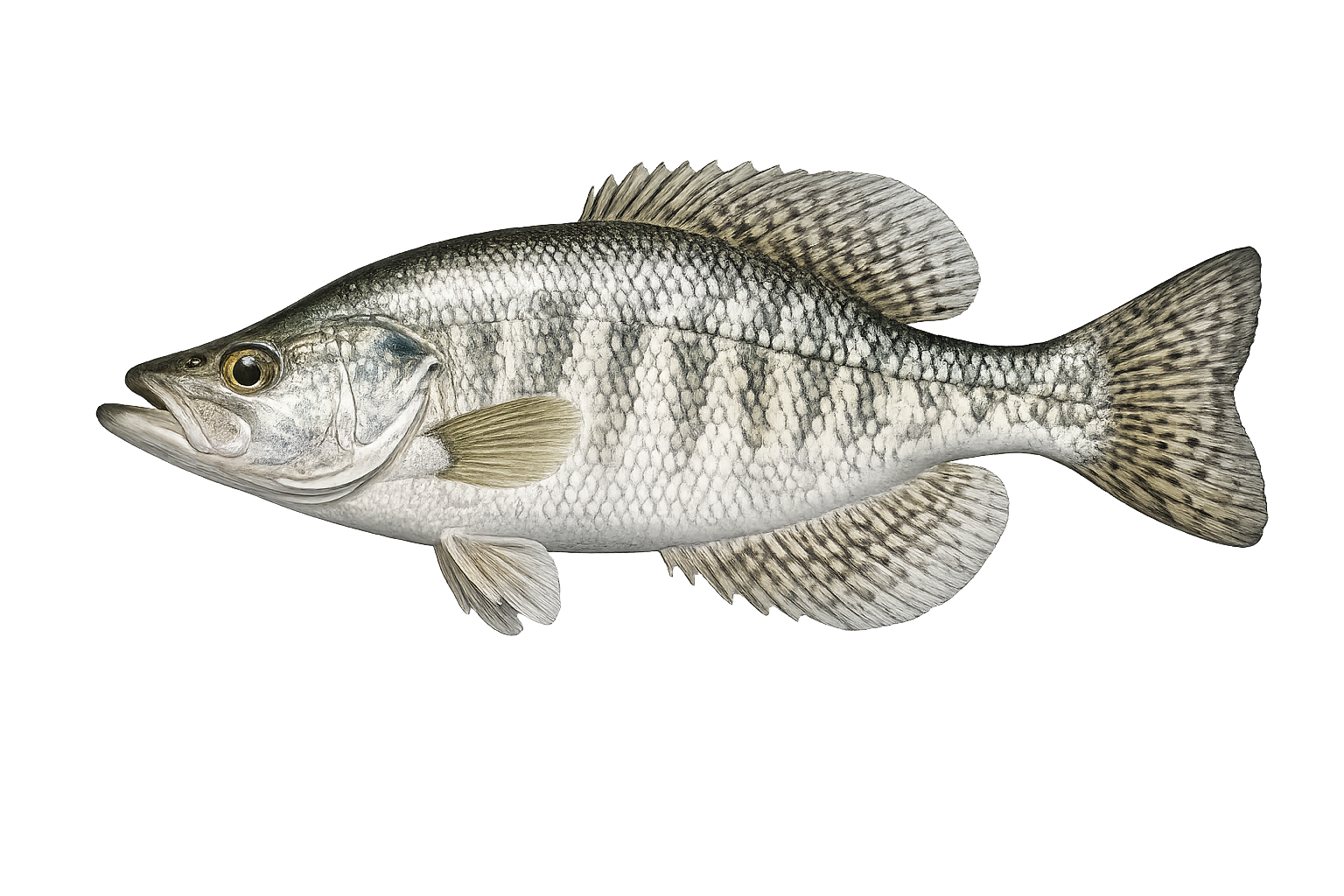
Crappie are members of the sunfish family and come in two species: black crappie (Pomoxis nigromaculatus) and white crappie (Pomoxis annularis). Both species grow to similar sizes, with fish over 2 pounds considered excellent and 3+ pounders being exceptional. Crappie are schooling fish that suspend at specific depths, often relating to cover like submerged timber, brush piles, and docks. This schooling behavior is the key to productive crappie fishing — once you find the right depth and cover, you can catch fish after fish from the same spot.
Habitat & Distribution
Crappie need two things: cover and forage. Submerged brush piles, standing timber, stake beds, and boat docks provide the structure crappie use for ambush feeding and protection. In lakes without timber, they relate to weed edges, rock piles, and man-made structure. Crappie move seasonally between shallow water (spring spawn, 1-6 feet) and deep water (summer/winter, 15-30+ feet), but always maintain a relationship with some form of cover.
Best Seasons for Fishing
Spring
The spring crappie spawn (March-May depending on latitude) is the best fishing of the year. Crappie move from deep water to shallow cover — brush piles, stake beds, docks, and flooded timber in 1-6 feet of water. Small jigs (1/16-1/32 oz) and minnows under slip bobbers are deadly.
Summer
Crappie suspend over deeper structure — standing timber, brush piles, and creek channels in 12-25 feet. Spider-rigging (multiple rods) with jigs and minnows trolled slowly through timber is the go-to summer method. Electronics to locate suspended fish are essential.
Fall
Crappie follow baitfish to transition areas between shallow and deep water. Target points, creek channel bends, and deeper brush piles with small jigs and live minnows. Fall fishing can be as good as spring but with less angling pressure.
Winter
Crappie school tightly in deep water (20-35 feet) over main lake structure. Vertical jigging with tiny hair jigs or tipping jigs with wax worms through the ice produces excellent catches. In open water, slow-trolling minnows through brush timber is effective.
Effective Fishing Techniques
Jig Under Bobber
The simplest and most effective crappie method. Rig a 1/16-1/32 oz jig (tube, curl-tail, or marabou) under a slip bobber set to the appropriate depth. Cast to brush, docks, or timber and let it sit. Add a live minnow for maximum effectiveness.
Spider Rigging
Use multiple rods (6-8) fanned out from the bow of a boat, each rigged with a jig or minnow at different depths. Slowly troll through standing timber and brush. This covers the water column and helps pinpoint the exact depth crappie are holding.
Shooting Docks
An advanced technique where you "shoot" a jig under dock walkways by pinching the jig, pulling back the rod like a slingshot, and releasing. The jig skips under tight spaces where big crappie hide. Requires practice but extremely effective.
Vertical Jigging
Drop a small jig or minnow straight down to suspended crappie marked on sonar. Tiny lifts and drops — just 6-12 inches of movement — trigger bites. Use the lightest jig that maintains bottom contact. Sensitivity is critical.
Tackle & Gear Recommendations
| Gear Type | Recommendation |
|---|---|
| Rod | 10'-12' ultralight crappie pole or 6' ultralight spinning rod |
| Reel | 1000-size spinning reel with smooth drag |
| Line | 4-6 lb monofilament or 6-8 lb braid with 4 lb fluoro leader |
| Lures | Small jigs (1/64-1/16 oz), tubes, marabou jigs, live minnows, slip bobbers |
Pro Tips for Success
Crappie have very soft, paper-thin mouths — use light drag and a slow hook-set to prevent tearing out.
Find the depth and you find the crappie. They school at specific depths, so experiment until you connect.
Brush piles are crappie magnets. Many state agencies sink brush in public lakes — check for GPS coordinates.
Two-inch tube jigs in chartreuse, pink, or white are the most universally effective crappie lures.
Spring spawning crappie prefer dark-bottom bays that warm first. Look for these areas early in the season.
Frequently Asked Questions
What is the difference between black crappie and white crappie?
Black crappie have irregular dark spots scattered across their body and 7-8 dorsal spines. White crappie have faint vertical bars and 5-6 dorsal spines. Black crappie prefer clearer water with vegetation; white crappie tolerate murkier conditions. Both are excellent table fish with virtually identical taste. They frequently co-exist in the same waters.
How do you find crappie in a lake?
Start with structure — brush piles, standing timber, docks, and stake beds. Use electronics (fish finder) to mark structure and suspended fish. In spring, check shallow bays with dark bottoms. In summer/fall, focus on deeper brush and creek channels. Many state wildlife agencies publish brush pile coordinates for public lakes — these are gold mines for crappie fishing.
Where is the best place to catch Crappie (Black & White)?
The best places to catch Crappie (Black & White) are in Submerged timber, brush piles, docks, and weed edges in lakes and reservoirs. Top states include MS, AL, TN. Local knowledge and seasonal patterns are key to finding productive spots.
What is the world record Crappie (Black & White)?
The world record Crappie (Black & White) weighs 5 lbs 7 oz (black) / 5 lbs 3 oz (white). This represents the largest authenticated catch on record. Most anglers pursue fish in the 0.5-1.5 lbs (9-12 inches) range.
What month is best for Crappie (Black & White) fishing?
The best months for Crappie (Black & White) fishing vary by location. Spring and summer typically offer excellent opportunities. Check your local regulations and seasonal guides for the most current information on your target waters.
What water temperature do Crappie (Black & White) prefer?
Crappie (Black & White) thrive in waters with specific temperature ranges depending on the season. Monitor water temperature when planning your fishing trip for optimal success and catch rates.
Can you catch Crappie (Black & White) from shore?
Yes, Crappie (Black & White) can often be caught from shore in suitable habitats like Submerged timber, brush piles, docks, and weed edges in lakes and reservoirs. Use appropriate gear and techniques for your chosen location. Always check local regulations before fishing.
What bait works best for Crappie (Black & White)?
Live bait, artificial lures, and specialized tackle are effective for Crappie (Black & White). Check the techniques and gear sections above for detailed recommendations based on your preferred fishing method.
Is Crappie (Black & White) good to eat?
Crappie (Black & White) is valued both as a game fish and for its culinary qualities in many regions. Check your local fishing regulations for specific rules about harvest and consumption.
What size hook for Crappie (Black & White)?
Hook size depends on your target Crappie (Black & White) size and bait choice. Medium to large hooks are typically recommended. See the gear breakdown section for specific tackle recommendations.