Chinook Salmon (King Salmon)
Oncorhynchus tshawytscha
The largest Pacific salmon, nicknamed "King" for its size, power, and prized flesh.

There is a reason they call Chinook salmon "king." Hooking a 40-pound Chinook on a river current is an experience that redefines what freshwater fishing can be. These magnificent fish spend years at sea building muscle and fat before returning to their natal rivers in massive spawning runs that have sustained cultures and economies for millennia. Whether you're trolling the Pacific blue water, drift fishing an Alaskan river, or running downriggers on Lake Michigan, king salmon deliver the ultimate freshwater fishing thrill.
Biology & Appearance
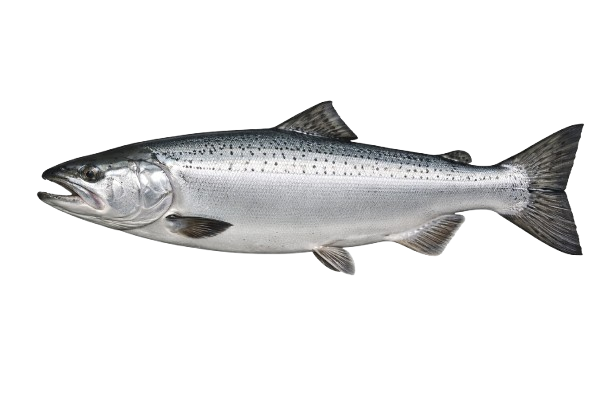
Chinook salmon are anadromous — born in freshwater rivers, they migrate to the ocean where they spend 2-5 years feeding and growing before returning to their birth river to spawn and die. This life cycle produces the largest of all Pacific salmon species, with ocean-run fish commonly exceeding 30 lbs and the all-tackle record standing at over 97 lbs from Alaska's Kenai River. Their flesh ranges from deep red to white depending on diet, with the red-fleshed variety commanding premium prices.
Habitat & Distribution
In rivers, Chinook require deep holding pools, gravel spawning beds, and cold, well-oxygenated water. They are found from California to Alaska in Pacific drainages, and have been successfully introduced to the Great Lakes where they now sustain a massive sport fishery. In the ocean, they range from California to Alaska, often found near structure, baitfish concentrations, and temperature breaks. Great Lakes Chinook follow similar patterns, relating to thermal bars and baitfish schools.
Best Seasons for Fishing
Spring
Spring Chinook (springers) enter rivers February-May and are considered the finest table fish. Target holding water — deep pools, tailouts, and seams. These are often hatchery-supplemented runs. Spinner and plug fishing from boats; bobber-and-egg or jig from bank.
Summer
Summer runs peak June-August in many Pacific rivers. Kenai River in Alaska offers world-class king salmon fishing July through early August. Trolling, back-bouncing, and anchor fishing with cured eggs or plugs are primary methods.
Fall
Fall Chinook are the largest runs in many river systems. September-November provides incredible fishing as massive numbers of fish push upstream. Lower river fishing is most accessible. Egg cures, spinners, and spoons are effective.
Winter
Limited Chinook opportunities in winter. Some late fall runs extend into December. Great Lakes Chinook can be targeted through ice fishing in harbors (Michigan, Wisconsin) or by trolling open water where conditions allow.
Effective Fishing Techniques
Trolling
In the ocean and Great Lakes, trolling with downriggers is the primary method. Run flasher/fly combos or cut-plug herring at precise depths determined by temperature and baitfish location. Speed of 2.0-3.5 mph depending on conditions.
Bobber and Jig/Egg
In rivers, drift a fixed or slip bobber with cured salmon eggs, jigs, or beads through holding water. This method keeps your presentation in the strike zone longer than any other technique. Adjust depth to keep bait 1-2 feet off the bottom.
Anchor Fishing (Plugs)
Anchor your boat above a known holding spot and let diving plugs (Mag Lips, FlatFish, Kwikfish) work in the current behind the boat. Wrap the plug belly with a sardine fillet for added scent. When the rod bends, the fight is on.
Spinner Fishing
Cast large inline spinners (size 5-6 Blue Fox or similar) across and downstream, retrieving slowly through holding water. Effective from both bank and boat. Chrome, brass, and fluorescent colors work in varying water clarity.
Tackle & Gear Recommendations
| Gear Type | Recommendation |
|---|---|
| Rod | 8'6" to 10'6" medium-heavy to heavy salmon/steelhead rod |
| Reel | 4000-5000 size spinning reel or level-wind trolling reel with line counter |
| Line | 20-30 lb monofilament main line; 15-25 lb fluorocarbon leader |
| Lures | Cured salmon eggs, plugs (Mag Lip, Kwikfish), spinners, spoons, flasher/fly rigs |
Pro Tips for Success
King salmon fight incredibly hard — ensure your drag is properly set before hooking up.
In rivers, identify holding water: deep slots, tailouts of pools, and inside bends with depth.
Cured eggs are the single most effective river bait. Learn to cure your own for best results.
Tide and river flow charts are essential planning tools — fish are most active during rising tides and increasing flows.
Respect spawning fish — catch-and-release mortality is high for salmon, so harvest or avoid spawners.
Frequently Asked Questions
Where is the best king salmon fishing in America?
Alaska's Kenai River is the undisputed king salmon capital of the world, producing fish averaging 30-50 lbs with fish over 70 lbs caught annually. Oregon's Columbia River tributaries (Willamette, Clackamas) offer excellent spring Chinook. In the Great Lakes, Lake Michigan's charter fleet out of Ludington, Manistee, and Frankfort provides world-class trolling.
What is the difference between Chinook and other salmon species?
Chinook (king) salmon are the largest Pacific salmon species, averaging 20-30 lbs with potential to exceed 60 lbs. They have black spots on the upper lobe of the tail and black gum line. Coho (silver) are smaller (8-12 lbs) with spots only on the upper tail lobe and white gums. Sockeye, pink, and chum salmon are all smaller and less commonly targeted by sport anglers.
Where is the best place to catch Chinook Salmon (King Salmon)?
The best places to catch Chinook Salmon (King Salmon) are in Pacific Ocean, rivers for spawning; also Great Lakes. Top states include AK, OR, WA. Local knowledge and seasonal patterns are key to finding productive spots.
What is the world record Chinook Salmon (King Salmon)?
The world record Chinook Salmon (King Salmon) weighs 97 lbs 4 oz (Les Anderson, 1985, Kenai River, AK). This represents the largest authenticated catch on record. Most anglers pursue fish in the 10-30 lbs (24-36 inches) range.
What month is best for Chinook Salmon (King Salmon) fishing?
The best months for Chinook Salmon (King Salmon) fishing vary by location. Spring and summer typically offer excellent opportunities. Check your local regulations and seasonal guides for the most current information on your target waters.
What water temperature do Chinook Salmon (King Salmon) prefer?
Chinook Salmon (King Salmon) thrive in waters with specific temperature ranges depending on the season. Monitor water temperature when planning your fishing trip for optimal success and catch rates.
Can you catch Chinook Salmon (King Salmon) from shore?
Yes, Chinook Salmon (King Salmon) can often be caught from shore in suitable habitats like Pacific Ocean, rivers for spawning; also Great Lakes. Use appropriate gear and techniques for your chosen location. Always check local regulations before fishing.
What bait works best for Chinook Salmon (King Salmon)?
Live bait, artificial lures, and specialized tackle are effective for Chinook Salmon (King Salmon). Check the techniques and gear sections above for detailed recommendations based on your preferred fishing method.
Is Chinook Salmon (King Salmon) good to eat?
Chinook Salmon (King Salmon) is valued both as a game fish and for its culinary qualities in many regions. Check your local fishing regulations for specific rules about harvest and consumption.
What size hook for Chinook Salmon (King Salmon)?
Hook size depends on your target Chinook Salmon (King Salmon) size and bait choice. Medium to large hooks are typically recommended. See the gear breakdown section for specific tackle recommendations.