Channel Catfish
Ictalurus punctatus
America's most abundant catfish species, beloved for powerful fights and delicious table fare.

Channel catfish are the everyman's fish — accessible, abundant, hard-fighting, and delicious. You don't need an expensive boat or thousands of dollars in tackle to catch catfish. A simple rod, some fresh bait, and access to nearly any body of water in the central and eastern United States puts you in business. Catfishing culture runs deep in America, from traditional bank fishing on the Mississippi to competitive catfish tournaments with five-figure payouts.
Biology & Appearance
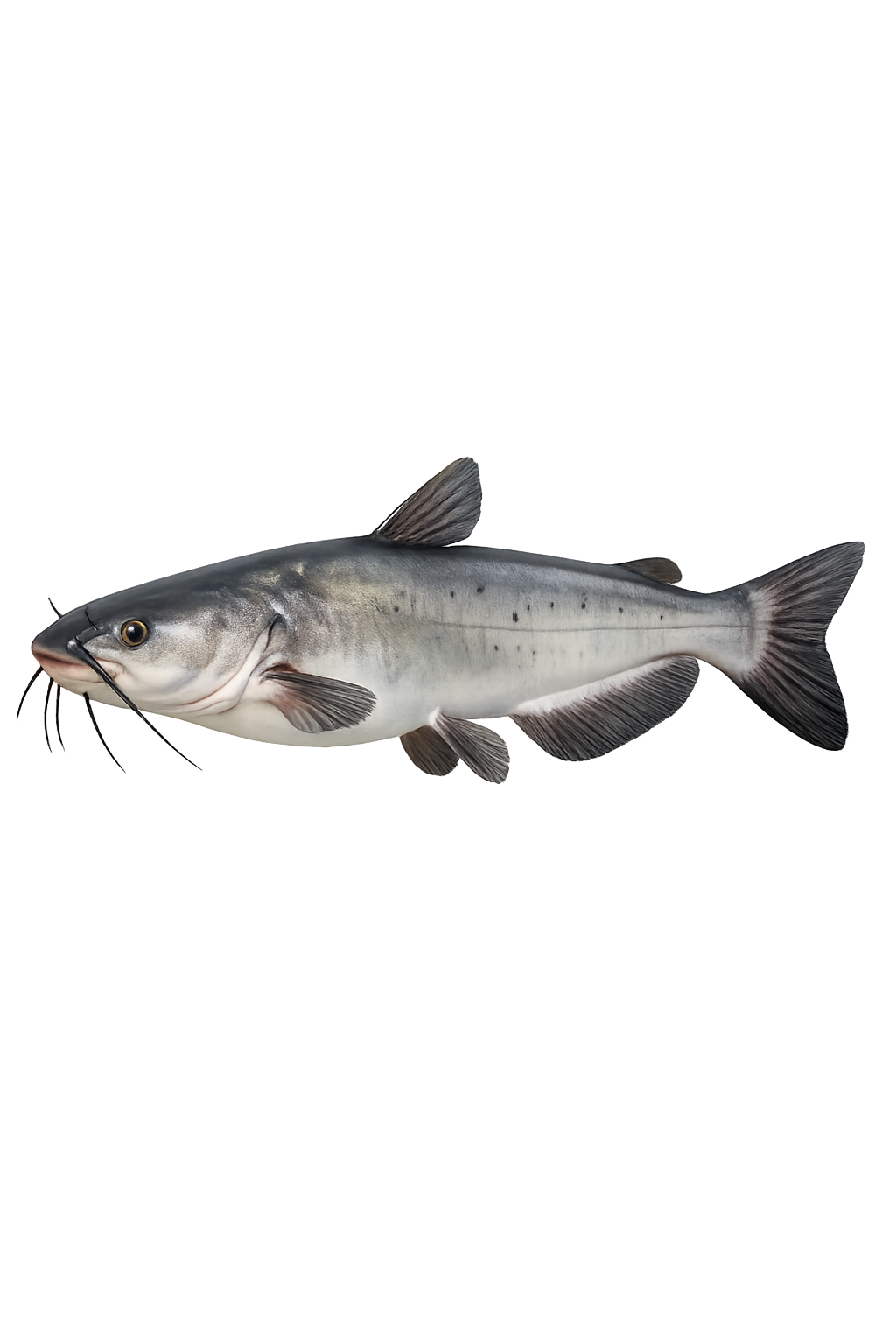
Channel catfish are the most numerous of North America's catfish species. They're identified by their deeply forked tail (distinguishing them from blue and flathead catfish), spotted flanks (on younger fish), and whisker-like barbels that house an extraordinary sense of smell and taste. These barbels can detect food particles at remarkably low concentrations, enabling catfish to feed effectively in muddy water and total darkness.
Habitat & Distribution
Channel catfish are perhaps the most adaptable freshwater fish in North America, thriving in rivers, lakes, reservoirs, ponds, and even brackish estuaries. In rivers, they favor channel bends, deep holes, current breaks behind wingdams, and dam tailraces. In lakes, they relate to channel ledges, humps, and flats adjacent to deeper water. Their adaptability is why they're found in virtually every warmwater body of water east of the Rocky Mountains.
Best Seasons for Fishing
Spring
Channel cats become increasingly active as water warms above 50°F. Pre-spawn feeding peaks in May when catfish gorge before moving to spawning cavities. Target channel edges, riprap, and flats adjacent to spawning areas with cut bait and prepared baits.
Summer
Peak catfish season. Warm water (75-85°F) drives maximum activity. Night fishing is legendary — use stink baits, chicken liver, and cut shad on simple bottom rigs near channel bends, deeper holes, and dam tailraces. Wade fishing in rivers is productive and fun.
Fall
Excellent fishing continues through October. Catfish feed heavily before winter, moving to deeper water as temperatures drop. Fresh cut shad or skipjack on channel ledges and deep holes produces quality fish. Transition areas between flats and channels are productive.
Winter
Channel catfish slow down but don't stop feeding. Target the deepest holes in rivers and lakes with fresh cut bait. Fishing is slower but winter catfish average much larger. Midday (warmest period) is the best window.
Effective Fishing Techniques
Bottom Rig with Cut Bait
The most effective overall catfish method. Use a simple slip-sinker rig with a circle hook and fresh-cut shad, bluegill, or skipjack. Cast to channel edges, deep holes, or transition areas and let it soak. Circle hooks result in corner-of-mouth hookups for easy release.
Drift Fishing
Cover water in a boat by slow-drifting cut bait along river channels and lake flats. Use a controlled drift with a drift sock to maintain bottom contact. This method locates scattered fish quickly and is the preferred tournament approach.
Jug/Noodle Fishing
A fun, social method using free-floating jugs or pool noodles with baited lines. Set 10-20 jugs in a productive area and patrol them from a boat. When a jug starts moving, you've got a catfish. Check regulations — legal in most southern states.
Limb Lines/Trotlines
Set-line methods that fish unattended. Limb lines hang baited hooks from overhanging branches; trotlines stretch across sections of water with multiple hooks. Run lines at dusk and check before dawn. Very effective for numbers and big fish.
Tackle & Gear Recommendations
| Gear Type | Recommendation |
|---|---|
| Rod | 7' medium-heavy spinning or casting rod |
| Reel | 4000-5000 size spinning reel or medium baitcaster |
| Line | 15-20 lb monofilament or 30-40 lb braid |
| Lures | Circle hooks (2/0-5/0), egg sinkers, prepared stink bait, chicken liver, cut shad, live bait |
Pro Tips for Success
Fresh bait dramatically outperforms old bait. If possible, catch fresh shad or bluegill for cut bait.
Channel catfish have an incredible sense of smell — stinky baits really do work better.
Night fishing produces 3-5x more catfish than daytime in summer months.
Circle hooks are strongly recommended — they hook fish in the corner of the mouth for safe release.
After heavy rain, rivers push catfish to the edges where the current breaks — outstanding fishing opportunities.
Catfish often hold in surprising numbers in one spot. If you catch one, there are likely more nearby.
Frequently Asked Questions
What is the best bait for channel catfish?
Fresh-cut shad is the top choice for trophy channel catfish. For numbers fishing, chicken liver and prepared stink baits like Sonny's or Team Catfish are extremely effective. Live worms, crawfish, and live bluegill also produce well. The key is freshness — bait that has been frozen loses effectiveness compared to fresh.
Can you catch catfish during the day?
Yes, especially in river tailraces below dams where current concentrates food, and in deep holes or shaded areas of lakes. However, channel catfish are primarily nocturnal feeders in lakes and ponds, so night fishing is generally much more productive, particularly in summer.
Where is the best place to catch Channel Catfish?
The best places to catch Channel Catfish are in Rivers, lakes, reservoirs, and ponds with varied bottom composition. Top states include TX, KS, NE. Local knowledge and seasonal patterns are key to finding productive spots.
What is the world record Channel Catfish?
The world record Channel Catfish weighs 58 lbs (W.B. Whaley, 1964, Santee Cooper Reservoir, SC). This represents the largest authenticated catch on record. Most anglers pursue fish in the 2-8 lbs (15-24 inches) range.
What month is best for Channel Catfish fishing?
The best months for Channel Catfish fishing vary by location. Spring and summer typically offer excellent opportunities. Check your local regulations and seasonal guides for the most current information on your target waters.
What water temperature do Channel Catfish prefer?
Channel Catfish thrive in waters with specific temperature ranges depending on the season. Monitor water temperature when planning your fishing trip for optimal success and catch rates.
Can you catch Channel Catfish from shore?
Yes, Channel Catfish can often be caught from shore in suitable habitats like Rivers, lakes, reservoirs, and ponds with varied bottom composition. Use appropriate gear and techniques for your chosen location. Always check local regulations before fishing.
What bait works best for Channel Catfish?
Live bait, artificial lures, and specialized tackle are effective for Channel Catfish. Check the techniques and gear sections above for detailed recommendations based on your preferred fishing method.
Is Channel Catfish good to eat?
Channel Catfish is valued both as a game fish and for its culinary qualities in many regions. Check your local fishing regulations for specific rules about harvest and consumption.
What size hook for Channel Catfish?
Hook size depends on your target Channel Catfish size and bait choice. Medium to large hooks are typically recommended. See the gear breakdown section for specific tackle recommendations.